Donne nella Mitologia: Arianna, Giuditta, Medusa.
Women in Mythology: Ariadne, Judith, Medusa.
Le figure femminili della mitologia attraversano i secoli come archetipi di forza, fragilità, attesa e metamorfosi. Giuditta, Arianna e Medusa non appartengono soltanto a un passato remoto: nelle opere di AlbertiniArt ritornano come presenze contemporanee, capaci di interrogare il nostro tempo.
Con la serie Donne nella Mitologia, il mito non viene riprodotto come citazione classica, ma trasformato in materia viva. Marmo, bronzo, ceramica e metallo diventano superfici di memoria, ferita e rinascita.
Queste figure femminili non sono reliquie dell’immaginario antico, ma riapparizioni: donne spezzate e insieme resistenti, sospese tra mito e cronaca, fragilità e forza, dolore e possibilità di salvezza.
The female figures of mythology have crossed the centuries as archetypes of strength, fragility, waiting and metamorphosis. Judith, Ariadne and Medusa do not belong only to a remote past: in the works of AlbertiniArt they return as contemporary presences, capable of questioning our time.
With the series Women in Mythology, myth is not reproduced as a classical quotation, but transformed into living matter. Marble, bronze, ceramic and metal become surfaces of memory, wound and rebirth.
These female figures are not relics of the ancient imagination, but reappearances: women who are broken and yet resistant, suspended between myth and chronicle, fragility and strength, pain and the possibility of salvation.
“Il mito è sempre già interpretazione.” — Gianni Vattimo
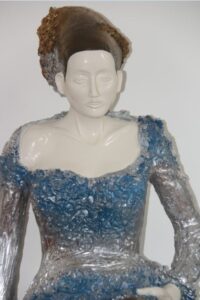
L’attesa di Arianna – Ariadne’s Waiting
Prova d’artista – Artist’s Proof
L’attesa di Arianna, scultura della serie Donne nella Mitologia di AlbertiniArt, rappresenta Arianna, abbandonata da Teseo sull’isola di Nasso, eppure luminosa, diventa simbolo di una sospensione che non conosce resa. La scultura trattiene l’istante dell’attesa come tempo fertile, in cui il dolore può trasformarsi in possibilità di rinascita.
Il volto e la postura parlano a chiunque sia rimasto in bilico tra perdita e speranza.
Ariadne, abandoned yet luminous, becomes the symbol of a suspension that does not surrender. The sculpture holds the instant of waiting as a fertile time, in which pain can turn into the possibility of rebirth.
Her face and posture speak to anyone who has remained suspended between loss and hope.
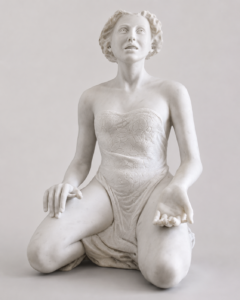
L’attesa di Arianna – Ariadne’s Waiting
Scultura in marmo – White marble sculpture
Il sospiro di Giuditta, scultura in marmo di AlbertiniArt, rappresenta Giuditta non è soltanto come la vincitrice del racconto biblico. Nel suo respiro sospeso si manifesta la tensione tra fragilità e forza, tra violenza subita e necessità di resistere.
La scultura diventa gesto di verità: un marmo che trattiene il silenzio, la dignità e il coraggio di chi osa cambiare il proprio destino.
Judith is not merely the victor of the biblical story. In her suspended breath, the tension between fragility and strength emerges, between violence endured and the need to resist.
The sculpture becomes a gesture of truth: a marble that holds silence, dignity and the courage of those who dare to change their own destiny.
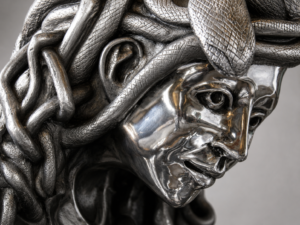
Il nuovo volto di Medusa – The New Face of Medusa
Scultura in metallo – Metal sculpture
Il nuovo volto di Medusa, scultura in metallo di AlbertiniArt, non è più soltanto l’icona del terrore. Nel metallo lucidato diventa il riflesso di una metamorfosi: una figura che rivela la possibilità di affrontare la paura e trasformarla in consapevolezza.
Il suo sguardo non pietrifica, ma restituisce energia. Guardare Medusa significa attraversare il mostro, riconoscere la ferita e aprire una possibilità di rinascita.
The New Face of Medusa, metal sculpture di AlbertiniArt is no longer merely the icon of terror. In polished metal, she becomes the reflection of a metamorphosis: a figure that reveals the possibility of facing fear and transforming it into awareness.
Her gaze does not petrify, but restores energy. To look at Medusa means to pass through the monster, to recognize the wound and to open a possibility of rebirth.
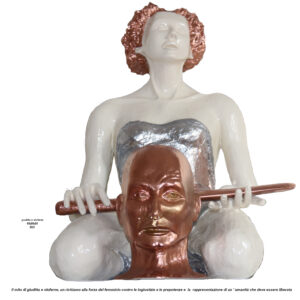
Giuditta e Oloferne – Judith and Holofernes
Prova d’artista – Artist’s Proof
Giuditta affronta Oloferne, scultura della serie Donne nella Mitologia di AlbertiniArt, come figura simbolica della resistenza femminile. La fragilità apparente si trasforma in forza, decisione e liberazione.
In questa prova d’autore, il mito viene interpretato come immagine contemporanea della ferita, del coraggio non solo come un semplice racconto, ma come rinascita.
Judith confronts Holofernes as a symbolic figure of female resistance. Apparent fragility is transformed into strength, decision and liberation.
In this artist’s proof, AlbertiniArt interprets the myth not as a simple narrative, but as a contemporary image of wound, courage and rebirth.
“Il coraggio è l’inizio della libertà.” — Hegel
Queste sculture, sospese tra memoria e presente, affidano al mito il compito di parlare ancora al nostro tempo. Arianna non è più soltanto la donna abbandonata, ma l’immagine di una ricerca di senso che riguarda ogni esistenza. Giuditta non è solo l’eroina vittoriosa, ma la testimone di un coraggio che attraversa il femminile universale. Medusa non è più soltanto il volto terrificante, ma la maschera che rivela la paura e, insieme, la forza di guardarla.
La serie Donne nella Mitologia trasforma così il linguaggio antico in scultura contemporanea, offrendo allo sguardo un ponte tra estetica e impegno civile, tra simbolo e materia, tra mito e coscienza del presente.
These sculptures, suspended between memory and the present, entrust myth with the task of speaking once again to our time. Ariadne is no longer only the abandoned woman, but the image of a search for meaning that concerns every existence. Judith is not only the victorious heroine, but the witness of a courage that crosses the universal feminine. Medusa is no longer merely the terrifying face, but the mask that reveals fear and, at the same time, the strength to look at it.
The series Women of Mythology thus transforms an ancient language into contemporary sculpture, offering the gaze a bridge between aesthetics and civil commitment, between symbol and matter, between myth and the consciousness of the present.