Come nascono le opere di AlbertiniArt
Le opere di AlbertiniArt nascono dal rapporto tra figura, materia e memoria. Bronzo, marmo, ceramica, legno, cera e metallo non sono semplici materiali, ma luoghi di trasformazione: trattengono il gesto, il tempo, la ferita e la possibilità della rinascita.
La ricerca si sviluppa attraverso nuclei tematici riconoscibili: Donne nella mitologia, Sculture per la Pace, Biosculture / Bronzo organico, Sulla punta, dipinti e trasfigurazioni. Pur nella varietà dei linguaggi, il centro resta la figura: corpo, volto, presenza simbolica.
Il mito non è citazione del passato, ma forma viva attraverso cui interrogare il presente. Medusa, Giuditta e Arianna diventano figure della ferita, della resistenza e della speranza; le sculture per la pace trasformano il corpo in gesto civile; le biosculture portano la fragilità originaria della materia verso una forma di durata.
La scultura di AlbertiniArt non cerca l’effetto decorativo, ma una presenza necessaria: una forma capace di custodire memoria, responsabilità e trasformazione.
How AlbertiniArt’s Works Are Born
lbertiniArt’s works arise from the relationship between figure, matter and memory. Bronze, marble, ceramic, wood, wax and metal are not merely materials, but places of transformation: they retain gesture, time, wound and the possibility of rebirth.
The research develops through recognizable thematic bodies of work: Women in Mythology, Sculptures for Peace, Biosculptures / Organic Bronze, On Tiptoe, paintings and transfigurations. Despite the variety of languages, the centre remains the figure: body, face, symbolic presence.
Myth is not a quotation from the past, but a living form through which the present can be questioned. Medusa, Judith and Ariadne become figures of wound, resistance and hope; the sculptures for peace transform the body into a civic gesture; the biosculptures carry the original fragility of matter towards a form of duration.
AlbertiniArt’s sculpture does not seek decorative effect, but a necessary presence: a form capable of preserving memory, responsibility and transformation.
Ogni scultura di Albertiniart è una visione, un simbolo non è solo un ornamento.
E’ una poetica figurativa simbolica contemporanea
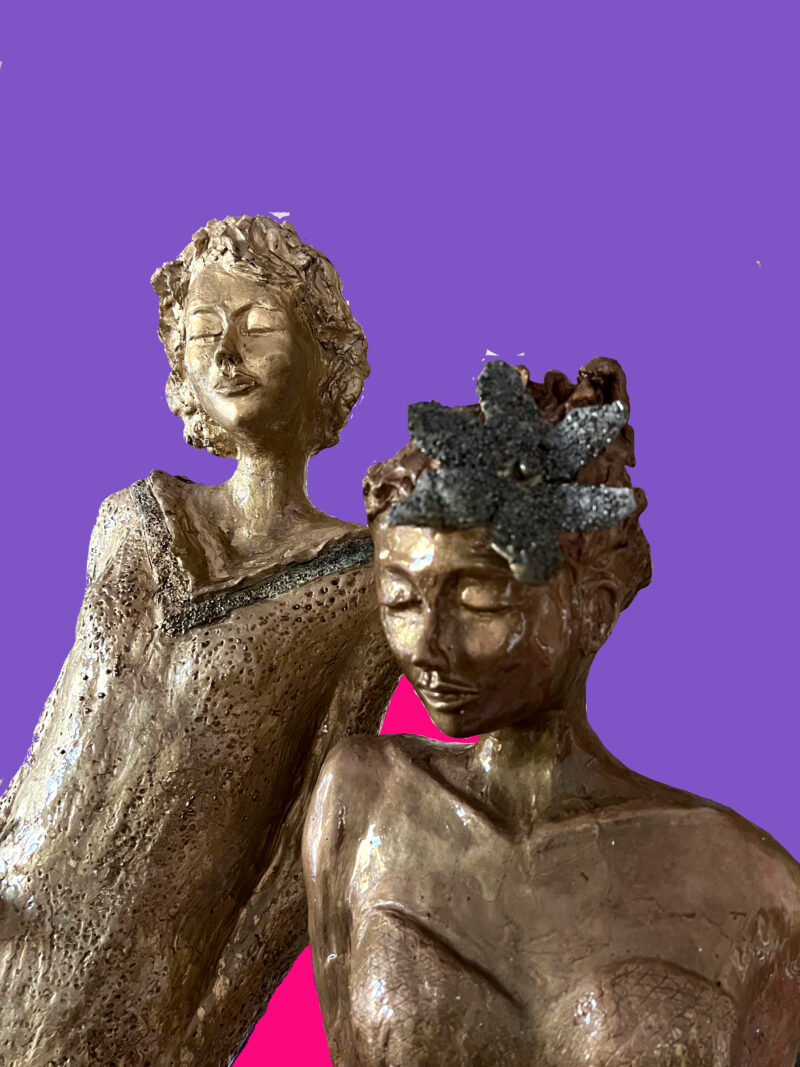
In un’epoca dominata dalla ripetizione Albertiniart rivendica l’importanza del figurativo simbolico come forma di identità artistica profonda, non seriale. Non c’è nostalgia nel suo sguardo classico, ma una volontà di futuro: quella di dare nuova voce all’umano in un tempo che tende a disumanizzare.
Poetica
La forma ferita
La ricerca di AlbertiniArt nasce dalla volontà di restituire alla scultura una presenza necessaria. La figura non è nostalgia del classico, ma forma attraverso cui interrogare il presente: il corpo, il volto, la ferita, la memoria, la possibilità di una rinascita.
Le opere attraversano materiali e soggetti diversi — bronzo, marmo, ceramica, legno, cera e metallo — ma rispondono a una stessa tensione: dare forma a ciò che resta fragile, silenzioso, vulnerabile.
Il mito, la figura femminile, la guerra, la pace, la natura e il corpo non sono temi separati, ma capitoli di un’unica ricerca simbolica. Medusa, Giuditta, Arianna, le biosculture e le sculture per la pace diventano presenze attraverso cui leggere il nostro tempo.
La coerenza del lavoro non nasce dalla ripetizione di una formula, ma da uno sguardo: ogni opera è diversa, ma partecipa alla stessa domanda sulla materia, sulla memoria e sulla responsabilità della forma.
Materiali
Il bronzo trattiene la durata.
Il marmo custodisce il peso della forma.
La ceramica conserva fragilità e trasformazione.
Il legno e la cera portano l’impronta originaria del gesto.
Nelle biosculture, il bronzo organico conduce la fragilità dei materiali verso una forma di permanenza. Ciò che nasce fragile viene consegnato alla resistenza del tempo.
Una scultura del presente
La scultura di AlbertiniArt non cerca l’effetto decorativo, ma una presenza capace di resistere. Non illustra, non replica, non rincorre la moda: interroga. La forma diventa luogo di memoria, ferita e rinascita.
“Non creo per ripetere. Creo per testimoniare.
Ogni figura, ogni materia, ogni ferita che scolpisco è una voce che chiede ascolto.”
— AlbertiniArt
Poetics
The Wounded Form
AlbertiniArt’s research arises from the desire to restore to sculpture a necessary presence. The figure is not a nostalgic return to the classical tradition, but a form through which the present can be questioned: the body, the face, the wound, memory, and the possibility of rebirth.
The works move across different materials and subjects — bronze, marble, ceramic, wood, wax and metal — yet they respond to the same inner tension: to give form to what remains fragile, silent and vulnerable.
Myth, the female figure, war, peace, nature and the body are not separate themes, but chapters of a single symbolic research. Medusa, Judith, Ariadne, the biosculptures and the sculptures for peace become presences through which our time can be read.
The coherence of the work does not arise from the repetition of a formula, but from a gaze: each work is different, yet each takes part in the same question about matter, memory and the responsibility of form.
Materials
Bronze preserves duration.
Marble holds the weight of form.
Ceramic retains fragility and transformation.
Wood and wax carry the original imprint of the gesture.
In the biosculptures, organic bronze leads the fragility of the materials towards a form of permanence. What is born fragile is entrusted to the resistance of time.
A Sculpture of the Present
AlbertiniArt’s sculpture does not seek decorative effect, but a presence capable of resisting. It does not illustrate, replicate or follow fashion: it questions. Form becomes a place of memory, wound and rebirth.